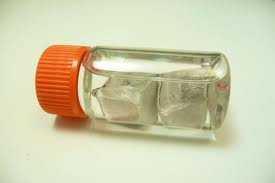
Magnesium

Magnesium


Overview
Physical and chemical properties
Isotopes
Creation
Applications ( as metal )
Applications of magnesium compounds
Popular reactions


Overview
Magnesium is a chemical element with symbol Mg and atomic number 12.
And electronic configuration is 1S2 2S22P6 3S2.

Its common oxidation number is +2.
It is an alkaline earth metal and the eighth most abundant element in the Earth's crust and ninth in the known universe as a whole.
Magnesium is the fourth most common element in the Earth as a whole (behind iron, oxygen and silicon), making up 13% of the planet's mass and a large fraction of the planet's mantle.
The relative abundance of magnesium is related to the fact that it is easily built up in supernova stars from a sequential addition of three helium nuclei to carbon (which in turn is made from three helium nuclei).
Due to magnesium ion's high solubility in water, it is the third most abundant element dissolved in seawater.( mainly as MgCl2 )

The free element (metal) is not found naturally on Earth, as it is highly reactive (though once produced, it is coated in a thin layer of oxide, which partly masks this reactivity).
The free metal burns with a characteristic brilliant white light, making it a useful ingredient in flares.

 
The metal is now mainly obtained by electrolysis of magnesium salts obtained from brine.

Commercially, the chief use for the metal is as an alloying agent to make aluminium-magnesium alloys,

sometimes called "magnalium" or "magnelium". Since magnesium is less dense than aluminium, these alloys are prized for their relative lightness and strength.

In human biology, magnesium is the eleventh most abundant element by mass in the human body; its ions are essential to all living cells, where they play a major role in manipulating important biological polyphosphate compounds like ATP, DNA, and RNA.
Hundreds of enzymes thus require magnesium ions to function.
Magnesium compounds are used medicinally as common laxatives, antacids (e.g., milk of magnesia),

and in a number of situations where stabilization of abnormal nerve excitation and blood vessel spasm is required (e.g., to treat eclampsia). Magnesium ions are sour to the taste, and in low concentrations they help to impart a natural tartness to fresh mineral waters.


Physical and chemical properties
Elemental magnesium is a

  •     fairly strong,
  •     silvery-white,
  •     light-weight metal (two thirds the density of aluminium).
It tarnishes slightly when exposed to air, although unlike the alkali metals, an oxygen-free environment is unnecessary for storage because magnesium is protected by a thin layer of oxide that is fairly impermeable and difficult to remove.
Like its lower periodic table group neighbor calcium, magnesium reacts with water at room temperature, though it reacts much more slowly than calcium.
When submerged in water, hydrogen bubbles will almost unnoticeably begin to form on the surface of the metal, though if powdered it will react much more rapidly.
The reaction will occur faster with higher temperatures.
Magnesium's ability to react with water can be harnessed to produce energy and run a magnesium-based engine.
Magnesium also reacts exothermically with most acids, such as hydrochloric acid (HCl).
As with aluminium, zinc and many other metals, the reaction with hydrochloric acid produces the chloride of the metal and releases hydrogen gas.


Magnesium is a highly flammable metal, but while it is easy to ignite when powdered or shaved into thin strips, it is difficult to ignite in mass or bulk. Once ignited, it is difficult to extinguish,
being able to burn in nitrogen (forming magnesium nitride),
Mg(s) + N2(g)  → Mg3N2(s)
carbon dioxide (forming magnesium oxide and carbon)
Mg(s) + CO2(g)  → MgO(s) + C(s)
and water (forming magnesium oxide and hydrogen).
Mg(s) + H2O(g / l )  → MgO(s) + H2(g)
This property was used in incendiary weapons used in the firebombing of cities in World War II, the only practical civil defense being to smother a burning flare under dry sand to exclude the atmosphere.
On burning in air, magnesium produces a brilliant white light which includes strong ultraviolet.

Thus magnesium powder (flash powder) was used as a source of illumination in the early days of photography.
Later, magnesium ribbon was used in electrically ignited flash bulbs. Magnesium powder is used in the manufacture of fireworks and marine flares where a brilliant white light is required.
Flame temperatures of magnesium and magnesium alloys can reach 3,100 °C (3,370 K; 5,610 °F)(note:°C=5/9 x ( °F - 32 )  and °C = K - 273.15 ), although flame height above the burning metal is usually less than 300 mm (12 in).[8] Magnesium may be used as an ignition source for thermite, an otherwise difficult to ignite mixture of aluminium and iron oxide powder.
Magnesium compounds are typically white crystals.
Most are soluble in water, providing the sour-tasting magnesium ion Mg2+. Small amounts of dissolved magnesium ion contribute to the tartness and taste of natural waters. ( you will learn about it more in a later section under "water" , or you can use the navigation page to navigate through,,here I am not entering those things in hope of not to make this ugly )
Magnesium ion in large amounts is an ionic laxative, and magnesium sulfate (common name: Epsom salt) is sometimes used for this purpose.
So-called "milk of magnesia" is a water suspension of one of the few insoluble magnesium compounds, magnesium hydroxide.

The undissolved particles give rise to its appearance and name.
Milk of magnesia is a mild base commonly used as an antacid, which has some laxative side effect.


Isotopes
Magnesium has three stable isotopes:
    24Mg    78.99%    12 neutrons
    25Mg    10.00%     13 neutrons
    26Mg    11.01%     14 neutrons
All are present in significant amounts.

About 79% of Mg is 24Mg.
The isotope 28Mg is radioactive and in the 1950s to 1970s was made commercially by several nuclear power plants for use in scientific experiments. This isotope has a relatively short half-life (21 hours) and so its use was limited by shipping times.
26Mg has found application in isotopic geology, similar to that of aluminium. 26Mg is a radiogenic daughter product of 26Al, which has a half-life of 717,000 years. Large enrichments of stable 26Mg have been observed in the Ca-Al-rich inclusions of some carbonaceous chondrite meteorites. The anomalous abundance of 26Mg is attributed to the decay of its parent 26Al in the inclusions. Therefore, the meteorite must have formed in the solar nebula before the 26Al had decayed. Hence, these fragments are among the oldest objects in the solar system and have preserved information about its early history.
It is conventional to plot 26Mg/24Mg against an Al/Mg ratio. In an isochron dating plot, the Al/Mg ratio plotted is27Al/24Mg. The slope of the isochron has no age significance, but indicates the initial 26Al/27Al ratio in the sample at the time when the systems were separated from a common reservoir.
( Most of the theories related to half-life goes under the subject "PHYSICS"
Any how under these tutorials I have described it simply use navigation page )

Creation 

(note:Magnesium is produced in stars larger than 3 solar masses by fusing helium and neon in the alpha process at temperatures above 600 megakelvins.)

Although magnesium is found in over 60 minerals, only

  •     dolomite,
  •     magnesite,
  •     brucite [ Mg(OH)2 ],
  •     carnallite,
  •     talc, and
  •     olivine
are of commercial importance.

The Mg2+ cation is the second most abundant cation in seawater (occurring at about 12% of the mass of sodium there), which makes seawater and sea-salt an attractive commercial source of Mg.
To extract the magnesium, calcium hydroxide is added to seawater to form magnesium hydroxide precipitate.

 
  MgCl2 + Ca(OH)2 → Mg(OH)2 + CaCl2

Magnesium hydroxide (brucite) is insoluble in water so it can be filtered out, and reacted with hydrochloric acid to obtain concentrated magnesium chloride.

    Mg(OH)2 + 2 HCl → MgCl2 + 2 H2O

From magnesium chloride, electrolysis produces magnesium.

In the United States, magnesium is principally obtained by electrolysis of fused magnesium chloride from brines, wells, and sea water.

At the cathode, the Mg2+ ion is reduced by two electrons to magnesium metal:

    Mg2+ + 2 e → Mg

At the anode, each pair of Cl ions is oxidized to chlorine gas, releasing two electrons to complete the circuit:

    2 Cl → Cl2 (g) + 2 e

The United States has traditionally been the major world supplier of this metal, supplying 45% of world production even as recently as 1995.
Today, the US market share is at 7%, with a single domestic producer left, US Magnesium, a Renco Group company in Utah born from now-defunct Magcorp.

As of 2005, China has taken over as the dominant supplier, pegged at 60% world market share, which increased from 4% in 1995. Unlike the above-described electrolytic process, China is almost completely reliant on a different method of obtaining the metal from its ores, the silicothermic Pidgeon process (the reduction of the oxide at high temperatures with silicon).
( It will be enough for you to know about the above process )


Applications ( as metal )

Magnesium is the third most commonly used structural metal, following iron and aluminium. It has been called the lightest useful metal by The Periodic Table of Videos.

The main applications of magnesium are, in order:

  •     component of aluminium alloys,
  •     in die-casting (alloyed with zinc),
  •     to remove sulfur in the production of iron and steel,
  •     the production of titanium in the Kroll process.

Magnesium, in its purest form, can be compared with aluminium, and is strong and light, so it is used in several high volume part manufacturing applications, including automotive and truck components.
Specialty, high-grade car wheels of magnesium alloy are called "mag wheels", although the term is often more broadly misapplied to include aluminium wheels.

"The high magnesium content used for the crankcase of the late-World War II Wright Duplex Cyclone eighteen-cylinder radial aviation engine was a serious problem for the earliest examples of the Boeing B-29 heavy bomber, as engine fires in flight could set the engine crankcases alight, literally "torching" the wing spar apart in under a minute causing wing failure."

The second application field of magnesium is electronic devices.
Because of :

  •     low weight,
  •     good mechanical and electrical properties,
magnesium is widely used for manufacturing of mobile phones, laptop and tablet computers, cameras, and other electronic components.

Historically, magnesium was one of the main aerospace construction metals and was used for German military aircraft as early as World War I and extensively for German aircraft in World War II.

The Germans coined the name 'Elektron' for magnesium alloy. The term is still used today.
The application of magnesium in the commercial aerospace industry was generally restricted to engine related components, due either to perceived hazards with magnesium parts in the event of fire, or corrosion.
Currently the use of magnesium alloys in aerospace is increasing, mostly driven by the increasing importance of fuel economy and the need to reduce weight.
The development and testing of new magnesium alloys continues, notably Elektron 21, which has successfully undergone extensive aerospace testing for suitability in engine, internal and airframe components.
The European Community runs three R&D magnesium projects in the Aerospace priority of Six Framework Program.


Niche uses of the metal

Magnesium, being readily available and relatively nontoxic, has a variety of uses:

  • Magnesium is flammable, burning at a temperature of approximately 3,100 °C (3,370 K; 5,610 °F), and the autoignition temperature of magnesium ribbon is approximately 473 °C (746 K; 883 °F).It produces intense, bright, white light when it burns. Magnesium's high burning temperature makes it a useful tool for starting emergency fires during outdoor recreation. Other uses include flash photography, flares, pyrotechnics and fireworks sparklers. Magnesium is also often used to ignite thermite, or other materials that require a high ignition temperature.


  • In the form of turnings or ribbons, to prepare Grignard reagents, which are useful in organic synthesis.


  • As an additive agent in conventional propellants and the production of nodular graphite in cast iron.


  • As a reducing agent for the production of uranium and other metals from their salts.


  • As a sacrificial (galvanic) anode to protect underground tanks, pipelines, buried structures, and water heaters.


  • As a metal, this element's principal use is as an alloying additive to aluminium with these aluminium-magnesium alloys being used mainly for beverage cans.


Applications of magnesium compounds

  • Magnesium compounds, primarily magnesium oxide (MgO), are used as a refractory material in furnace linings for producing iron, steel, nonferrous metals, glass and cement. Magnesium oxide and other magnesium compounds are also used in the agricultural, chemical, and construction industries.


  • Magnesium reacted with an alkyl halide gives a Grignard reagent ( you will learn more under organic chemistry ), which is a very useful tool for preparing alcohols.


Popular reactions

 Mg(s) + HOT H2O(l) → Mg(OH)2(s) + H2(g)
 Mg(s) +H2O(g) → MgO(s) + H2(g)
 Mg(s) + O2(g)→ MgO(s)
 Mg(s) + N2(g)→ Mg3N2(s)
 Mg(s) + CO2(g)→ MgO(s) + C(s)
 Mg(s) + HCl(aq)→ MgCl2(aq) + H2(g)

 Mg(s) + H2SO4(aq)→ MgSO4(aq) + H2(g)
{ Whenever reacts with an acid [ for example an acid called HX ] it produces the salt of Mg2+ and H2 gas.As bellow:
 Mg(s) + HX(aq) → Mg(X)2(aq) + H2(g)

}

 Mg(s) + HNO3( aq / conc ) → Mg(NO3)2(aq) + NO2(g) + H2O(l)
{ But it is different when reacts with Nitric(V) acid because of it's high action it can oxidate H2(g) to H2O(l) }






Sodium


Sodium


Overview
Physical Characteristics
Chemical Characteristics
Commercial production
Isotopes
Applications of Free element
Other applications, specially Heat transfering
Compounds
Precautions
Popular reactions
Specieal characteristics of sodium


Overview
*electronic configuration 1S2 2S22P6 3S1
*Sodium is a chemical element with the symbol Na (from Latin: natrium) in the periodic table and atomic number 11.
*It is a soft, silvery-white, highly reactive metal and is a member of the alkali metals; its only stable isotope is 23Na.
*The free metal does not occur in nature, but instead must be prepared from its compounds; it was first isolated by Humphry *Davy in 1807 by the electrolysis of sodium hydroxide.
*Sodium is the sixth most abundant element in the Earth's crust, and exists in numerous minerals such as

  • feldspars,
  • sodalite and
  • rock salt.
Atomic structure

*Many salts of sodium are highly water-soluble, and their sodium has been leached by the action of water so that chloride and sodium are the most common dissolved elements by weight in the Earth's bodies of oceanic water.
*Many sodium compounds are useful, such as
sodium hydroxide (lye) for soapmaking, and
sodium chloride for use as a deicing agent and a nutrient (edible salt). Sodium is an essential element for all animals and some plants.
*In animals, sodium ions are used against potassium ions to build up charges on cell membranes, allowing transmission of nerve impulses when the charge is dissipated.
The consequent need of animals for sodium causes it to be classified as a dietary inorganic macro-mineral.


Physical Characteristics
*Sodium at standard temperature and pressure is a soft metal that can be readily cut with a knife and is a good conductor of electricity.

How soften it is
*Freshly exposed, sodium has a bright, silvery luster that rapidly tarnishes, forming a white coating of sodium hydroxide and sodium carbonate.
*These properties change at elevated pressures: at 1.5 Mbar, the color changes to black, then to red transparent at 1.9 Mbar, and finally clear transparent at 3 Mbar.
*All of these allotropes are insulators and electrides.
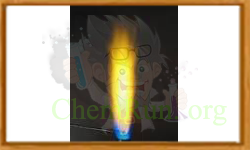
When sodium or its compounds are introduced into a flame, they turn it yellow,

Na when introduced to flame
because the excited 3s electrons of sodium emit a photon when they fall from 3p to 3s; the wavelength of this photon corresponds to the D line at 589.3 nm.
*Spin-orbit interactions involving the electron in the 3p orbital split the D line into two; hyperfine structures involving both orbitals cause many more lines.


Chemical Characteristics

*Sodium is generally less reactive than potassium and more reactive than lithium.
*Like all the alkali metals, it reacts exothermically with water, to the point that sufficiently large pieces melt to a sphere and may explode; this reaction produces caustic sodium hydroxide and flammable hydrogen gas.

Reaction with water

*When burned in dry air, it mainly forms sodium peroxide as well as some sodium oxide.
*In moist air, sodium hydroxide results.

  • Here are main reactions happen when a piece of sodium opened to air:
  1.  Na(s) + O2(g) Na2O(s)
  2.  Na(s) + H2O(g / l ) NaOH(aq) + H2(g)
  3.  Na2O(s) + H2O(g / l) NaOH(aq)
  4.  NaOH(aq) + CO2(g) Na2CO3(s) + H2O(l)
  5.  NaOH(aq) + CO2(g) + H2O(g/l) NaHCO3(aq)

*Sodium metal is highly reducing, with the reduction of sodium ions requiring −2.71 volts but potassium and lithium have even more negative potentials.
 *Hence, the extraction of sodium metal from its compounds (such as with sodium chloride) uses a significant amount of energy.


Isotopes
*20 isotopes of sodium are known, but only 23Na is stable.
Two radioactive, cosmogenic isotopes are the byproduct of cosmic ray spallation: 22Na with a half-life of 2.6 years and 24Na with a half-life of 15 hours; all other isotopes have a half-life of less than one minute.
*Two nuclear isomers have been discovered, the longer-lived one being 24mNa with a half-life of around 20.2 microseconds.
Acute neutron radiation, such as from a nuclear criticality accident, converts some of the stable 23Na in human blood to 24Na; by measuring the concentration of 24Na in relation to 23Na, the neutron radiation dosage of the victim can be calculated.


Commercial production
*Enjoying rather specialized applications, only about 100,000 tonnes of metallic sodium are produced annually.
Metallic sodium was first produced commercially in 1855 by carbothermal reduction of sodium carbonate at 1100 °C[citation needed], in what is known as the Deville process:

    Na2CO3 + 2 C → 2 Na + 3 CO

*A related process based on the reduction of sodium hydroxide was developed in 1886.

*Sodium is now produced commercially through the electrolysis of molten sodium chloride, based on a process patented in 1924.
At Cathode:
    Na+(l) + e Na(l)
At Anode:
    2Cl-(l) Cl2(g) + 2e
*This is done in a Downs Cell in which the NaCl is mixed with calcium chloride to lower the melting point below 700 °C.
As calcium is less electropositive than sodium, no calcium will be deposited at the cathode.
*This method is less expensive than the previous Castner process of electrolyzing sodium hydroxide.

*Reagent-grade sodium in tonne quantities sold for about US$3.
30/kg in 2009; lower purity metal sells for considerably less.
*The market for sodium is volatile due to the difficulty in its storage and shipping; it must be stored under a dry inert gas atmosphere or anhydrous mineral oil to prevent the formation of a surface layer of sodium oxide or sodium superoxide.
*These oxides can react violently in the presence of organic materials. Sodium will also burn violently when heated in air.
*Smaller quantities of sodium cost far more, in the range of US$165/kg; the high cost is partially due to the expense of shipping hazardous material.


Applications of Free element

Metallic sodium is mainly used for the production of

  • sodium borohydride,
  • sodium azide,
  •  indigo, and
  •  triphenylphosphine.
Previous uses were for the
  • making of tetraethyllead and
  • titanium metal;
  •  because applications for these chemicals were discontinued, the production of sodium declined after 1970.
  • Sodium is also used as
  • an alloying metal,
  • an anti-scaling agent, and as a reducing agent for metals when other materials are ineffective.
  • Sodium vapor lamps are often used for street lighting in cities and give colours ranging from yellow-orange to peach as the pressure increases.
*By itself or with potassium, sodium is a desiccant; it gives an intense blue colouration with benzophenone when the desiccate is dry.
*In organic synthesis, sodium is used in various reactions such as
the 

Birch reduction, and
the sodium fusion test is conducted to qualitatively analyse compounds. Lasers emitting light at the D line, utilising sodium, are used to create artificial laser guide stars that assist in the adaptive optics for land-based visible light telescopes.

Other applications, specially Heat transfering
*Liquid sodium is used as a heat transfer fluid in some fast reactors,due to its high thermal conductivity and low neutron absorption cross section, which is required to achieve a high neutron flux; the high boiling point allows the reactor to operate at ambient pressure.
*Drawbacks of using sodium include its opacity, which hinders visual maintenance, and its explosive properties. Radioactive sodium-24 may be formed by neutron activation during operation, posing a slight radiation hazard; the radioactivity stops within a few days after removal from the reactor. If a reactor needs to be frequently shut down, NaK is used; due to it being liquid at room temperature, cooling pipes do not freeze.
In this case, the pyrophoricity of potassium means extra precautions against leaks need to be taken.
*Another heat transfer application is in high-performance internal combustion engines with poppet valves, where valve stems partially filled with sodium are used as a heat pipe to cool the valves.


Compounds
Sodium compounds are of immense commercial importance, being particularly central to industries producing

  • glass,
  • paper,
  • soap, and
  • textiles.
The sodium compounds that are the most importantinclude
  • table salt (NaCl),
  • soda ash (Na2CO3),
  • baking soda (NaHCO3),
  • caustic soda (NaOH),
  • sodium nitrate (NaNO3),
  • di- and tri-sodium phosphates,
  • sodium thiosulfate (Na2S2O3·5H2O), and
  • borax (Na2B4O7·10H2O).
Na storage
*In its compounds, sodium is usually ionically bonded to water and anions, and is viewed as a hard Lewis acid.
*Two equivalent images of the chemical structure of sodium stearate, a typical soap.


Precautions
*Care is required in handling elemental sodium, as it generates inflammable hydrogen and caustic sodium hydroxide upon contact with water; powdered sodium may combust spontaneously in air or oxygen.
*Excess sodium can be safely removed by hydrolysis in a ventilated cabinet; this is typically done by sequential treatment with isopropanol, ethanol and water.

Isopropanol reacts very slowly, generating the corresponding alkoxide and hydrogen.

*Fire extinguishers based on water accelerate sodium fires; those based on carbon dioxide and bromochlorodifluoromethane lose their effectiveness when they dissipate.
*An effective extinguishing agent is Met-L-X, which comprises approximately 5% Saran in sodium chloride together with flow agents; it is most commonly hand-applied with a scoop.
*Other materials include Lith+, which has graphite powder and an organophosphate flame retardant, and dry sand. 

*Most soaps are sodium salts of fatty acids.
*Sodium soaps are harder (higher melting) soaps than potassium soaps.
*Sodium chloride is extensively used for anti-icing and de-icing and as a preservative; sodium bicarbonate is mainly used for cooking.
*Along with potassium, many important medicines have sodium added to improve their bioavailability; although in most cases potassium is the better ion, sodium is selected for its lower price and atomic weight.
*Sodium hydride is used as a base for various reactions (such as the aldol reaction) in organic chemistry, and as a reducing agent in inorganic chemistry.( you may learn aldol reaction under Organic chamistry )


Popular reactions

1) Na(s) + O2(g)
Na2O(s)
2) Na(s) + H2O(g / l )
NaOH(aq) + H2(g)
3) Na2O(s) + H2O(g / l)
NaOH(aq)
4) NaOH(aq) + CO2(g)
Na2CO3(s) + H2O(l)
5) NaOH(aq) + CO2(g) + H2O(g/l)
NaHCO3(aq)
(When kept in air)

6) Na(s) + S(s)
Na2S(s)
7) Na(s) + F2(g) (halogens)
NaF(s)
8) Na(s) + P(s)
Na3P(s)
Reaction with water
9) Na(s) + HCl(aq) NaCl(aq) + H2(g)
10)Na(s) + H2SO4(aq) Na2SO4(aq) + H2(g)
note: Na(s) when reacts with an acid it turns to salt of metal and reduces Hydrogen gas.for a example think an acid called " HX "
if it reacts with Na(s) :
Na(s) + HX(aq) NaX + H2(g)


11)Na(s) + NaOH(l) Nothing happens
12)Na(s) + NaOH(aq) NaOH(aq) + H2(g)
Note: The NaOH liquid (first) doesn't include free H+ / OH- ions as it doesn't contain water.
The NaOH aqueous solution it contains water and so that H+ / OH- contain.


13)Na(s) + CH3COOH(aq) CH3COONa(aq) + H2(g)
(you will learn these types of reactions under organic chemistry)


Specieal characteristics of sodium

.......................................

Atomic properties
Oxidation states +1, -1
(strongly basic oxide)
Electronegativity 0.93 (Pauling scale)
Ionization energies
(more)
1st: 495.8 kJ·mol−1
2nd: 4562 kJ·mol−1
3rd: 6910.3 kJ·mol−1
Atomic radius 186pm
Covalent radius 166±9pm
Van der Waals radius 227 pm
General properties
Name, symbol, number sodium, Na, 11
Pronunciation /soʊdiəm/SOH-dee-əm
Element category alkali metal
Group, period, block 1, 3, s
Standard atomic weight 22.98976928(2)
for more details (Advanced) visit wikipedia


Titration

Titration

Titration, also known as titrimetry, is a common laboratory method of quantitative chemical analysis that is used to determine the unknown concentration of an identified analyte. Because volume measurements play a key role in titration, it is also known as volumetric analysis. A reagent, called the titrant or titrator is prepared as a standard solution. A known concentration and volume of titrant reacts with a solution of analyte or titrant to determine concentration.


Procedure

A typical titration begins with a beaker or Erlenmeyer flask containing a precise volume of the titrand and a small amount of indicator placed underneath a calibrated burette or chemistry pipetting syringe containing the titrant. Small volumes of the titrant are then added to the titrand and indicator until the indicator changes, reflecting arrival at the endpoint of the titration. Depending on the endpoint desired, single drops or less than a single drop of the titrant can make the difference between a permanent and temporary change in the indicator. When the endpoint of the reaction is reached, the volume of reactant consumed is measured and used to calculate the concentration of analyte by
See the example below
    let's think  substances called A2B (A+ , B2- )and CD3 ( C3+ , D- )reacts, and makes AD
and CB

A2B + CD3  →  AD + C2B3
Now see below it has balanced,
 3A2B + 2 CD3  → 6  AD +  C2B3

now think you know the concentration of A2B. And you want to find(Math) the concentration of CD3.Below is the easiest and standard way to do;(really easy to understand.The [ ] means the "concentration of"

2 x [A2B] = 3 x [CD3]

it also can be written as follows;
[CD3] = [A2B]x(2/3)

Now you may have understand the way to do it . see how the numbers used to balance,( 3 for A2B and  2 for CD3 ) .it has interchanged in the math.That's all to say about, and it is your duty to practise the way.


Preparation techniques.
Typical titrations require titrant and analyte to be in a liquid (solution) form. Though solids are usually dissolved into an aqueous solution, other solvents such as glacial acetic acid or ethanol are used for special purposes (as in petrochemistry). Concentrated analytes are often diluted to improve accuracy.

Many non-acid-base titrations require a constant pH throughout the reaction. Therefore a buffer solution may be added to the titration chamber to maintain the pH.

In instances where two reactants in a sample may react with the titrant and only one is the desired analyte, a separate masking solution may be added to the reaction chamber which masks the unwanted ion.

Some redox reactions may require heating the sample solution and titrating while the solution is still hot to increase the reaction rate. For instance, the oxidation of some oxalate solutions requires heating to 60 °C (140 °F / 333K) to maintain a reasonable rate of reaction.


1.Acid-base titrations
Acid-base titrations depend on the neutralization between an acid and a base when mixed in solution. In addition to the sample, an appropriate indicator is added to the titration chamber, reflecting the pH range of the equivalence point. The acid-base indicator indicates the endpoint of the titration by changing color. The endpoint and the equivalence point are not exactly the same because the equivalence point is determined by the stoichiometry of the reaction while the endpoint is just the color change from the indicator. Thus, a careful selection of the indicator will reduce the indicator error. For example, if the equivalence point is at a pH of 8.4, then the Phenolphthalein indicator would be used instead of Alizarin Yellow because phenolphthalein would reduce the indicator error. Common indicators, their colors, and the pH range in which they change color are given in the table below. When more precise results are required, or when the reagents are a weak acid and a weak base, a pH meter or a conductance meter are used.


Indicator Color on acidic side Range of color change Color on basic side
Methyl Violet Yellow 0.0–1.6 Violet
Bromophenol Blue Yellow 3.0–4.6 Blue
Methyl Orange Red 3.1–4.4 Yellow
Methyl Red Red 4.4–6.3 Yellow
Litmus Red 5.0–8.0 Blue
Bromothymol Blue Yellow 6.0–7.6 Blue
Phenolphthalein Colorless 8.3–10.0 Pink
Alizarin Yellow Yellow 10.1–12.0 Red


2.Redox titration( RED_uction_ + OX_idation_ )
Redox titrations are based on a reduction-oxidation reaction between an oxidizing agent and a reducing agent. A potentiometer or a redox indicator is usually used to determine the endpoint of the titration, as when one of the constituents is the oxidizing agent potassium dichromate. The color change of the solution from orange to green is not definite, therefore an indicator such as sodium diphenylamine is used. Analysis of wines for sulfur dioxide requires iodine as an oxidizing agent. In this case, starch is used as an indicator; a blue starch-iodine complex is formed in the presence of excess iodine, signalling the endpoint.

Some redox titrations do not require an indicator, due to the intense color of the constituents.(eg: a titration uses the KMnO4 do not require indicaters as it shows the color changes itself.You may know it in a later section on KMnO4. You too can use the links page for navigating through what you want. For instance, in permanganometry a slight faint persisting pink color signals the endpoint of the titration because of the color of the excess oxidizing agent potassium permanganate.)


Common uses of Red-ox titration

    Winkler test for dissolved oxygen: Used to determine oxygen concentration in water. Oxygen in water samples is reduced using manganese(II) sulfate, which reacts with potassium iodide to produce iodine. The iodine is released in proportion to the oxygen in the sample, thus the oxygen concentration is determined with a redox titration of iodine with thiosulfate using a starch indicator.[31]
    Vitamin C: Also known as ascorbic acid, vitamin C is a powerful reducing agent. Its concentration can easily be identified when titrated with the blue dye Dichlorophenolindophenol (DCPIP) which turns colorless when reduced by the vitamin.[32]
    Benedict's reagent: Excess glucose in urine may indicate diabetes in the patient. Benedict's method is the conventional method to quantify glucose in urine using a prepared reagent. In this titration, glucose reduces cupric ions to cuprous ions which react with potassium thiocyanate to produce a white precipitate, indicating the endpoint.
    Bromine number: A measure of unsaturation in an analyte, expressed in milligrams of bromine absorbed by 100 grams of sample.
    Iodine number: A measure of unsaturation in an analyte, expressed in grams of iodine absorbed by 100 grams of sample.


3.Complexometric titration

Complexometric titration rely on the formation of a complex between the analyte and the titrant. In general, they require specialized indicators that form weak complexes with the analyte. Common examples are Eriochrome Black T for the titration of calcium and magnesium ions, and the chelating agent EDTA used to titrate metal ions in solution.

4.Zeta potential titration

Zeta potential titrations are titrations in which the completion is monitored by the zeta potential, rather than by an indicator, in order to characterize heterogeneous systems, such as colloids.One of the uses is to determine the iso-electric point when surface charge becomes zero, achieved by changing the pH or adding surfactant. Another use is to determine the optimum dose for flocculation or stabilization.

5.Assay

An assay is a form of biological titration used to determine the concentration of a virus or bacterium. Serial dilutions are performed on a sample in a fixed ratio (such as 1:1, 1:2, 1:4, 1:8, etc.) until the last dilution does not give a positive test for the presence of the virus. This value is known as the titer, and is most commonly determined through enzyme-linked immunosorbent assay (ELISA).

6.Gas phase titration

Gas phase titrations are titrations done in the gas phase, specifically as methods for determining reactive species by reaction with an excess of some other gas, acting as the titrant. In one common the gas phase titration, gaseous ozone is titrated with nitrogen oxide according to the reaction

    O3 + NO → O2 + NO2.[18][19]

After the reaction is complete, the remaining titrant and product are quantified (e.g., by FT-IR); this is used to determine the amount of analyte in the original sample.

Gas phase titration has several advantages over simple spectrophotometry. First, the measurement does not depend on path length, because the same path length is used for the measurement of both the excess titrant and the product. Second, the measurement does not depend on a linear change in absorbance as a function of analyte concentration as defined by the Beer-Lambert law. Third, it is useful for samples containing species which interfere at wavelengths typically used for the analyte.


This article is about "Bonds" in Chemistry.


"really  'Intermolecular bonding' are like you,your-mum,dad,sis/brother,,,,and  others (as ionic, covalent ...) are like you,your-friends,neighbour (the strength is depend how you handle them as well as it is different in each 
" "More you get closer , the more you can 'bond' "

Chemical bond

A chemical bond is an attraction between atoms that allows the formation of chemical substances

that contain two or more atoms. The bond is caused by the

  •     electrostatic force of attraction between opposite charges,
  •     either between electrons and nuclei,
  •     or as the result of a dipole attraction.

The strength of chemical bonds varies considerably; there are "strong bonds" such as covalent or ionic bonds and "weak bonds" such as dipole–dipole interactions, the London dispersion force and hydrogen bonding.( s.p.:in biology the "hydogen bonds" sre called as kind of strong bonds, but it is not true in chemistry )Since opposite charges attract via a simple electromagnetic force, the negatively charged electrons that are orbiting the nucleus and the positively charged protons in the nucleus attract each other. Also, an electron positioned between two nuclei will be attracted to both of them. Thus, the most stable configuration of nuclei and electrons is one in which the electrons spend more time between nuclei, than anywhere else in space. These electrons cause the nuclei to be attracted to each other, and this attraction results in the bond. However, this assembly cannot collapse to a size dictated by the volumes of these individual particles. Due to the matter wave nature of electrons and their smaller mass, they occupy a much larger amount of volume compared with the nuclei, and this volume occupied by the electrons keeps the atomic nuclei relatively far apart, as compared with the size of the nuclei themselves.In general, strong chemical bonding is associated with the sharing or transfer of electrons between the participating atoms. The atoms in molecules, crystals, metals and diatomic gases— indeed most of the physical environment around us— are held together by chemical bonds, which dictate the structure and the bulk properties of matter.


 Overview of main types of chemical bonds

A chemical bond is an attraction between atoms. This attraction may be seen as the result of different behaviors of the outermost electrons of atoms. Although all of these behaviors merge into each other seamlessly in various bonding situations so that there is no clear line to be drawn between them, nevertheless behaviors of atoms become so qualitatively different as the character of the bond changes quantitatively, that it remains useful and customary to differentiate between the bonds that cause these different properties of condensed matter.

" Covalent bond "
In the simplest view of a so-called 'covalent' bond, one or more
electrons (often a pair of electrons) are drawn into the space between the two atomic nuclei. Here the negatively charged electrons are attracted to the positive charges of both nuclei, instead of just their own. This overcomes the repulsion between the two positively charged nuclei of the two atoms, and so this overwhelming attraction holds the two nuclei in a fixed configuration of equilibrium, even though they will still vibrate at equilibrium position. Thus, covalent bonding involves sharing of electrons in which the positively charged nuclei of two or more atoms simultaneously attract the negatively charged electrons that are being shared between them. These bonds exist between two particular identifiable atoms, and have a direction in space, allowing them to be shown as single connecting lines between atoms in drawings, or modeled as sticks between spheres in models.

Covalent bonding is a common type of bonding, in which the electronegativity difference between the bonded atoms is small or nonexistent. Bonds within most organic compounds are described as covalent. See 'sigma' bonds and 'pi' bonds for LCAO-description of such bonding.

A polar covalent bond is a covalent bond with a significant ionic character. This means that the electrons are closer to one of the atoms than the other, creating an imbalance of charge. They occur as a bond between two atoms with moderately different electronegativities, and give rise to dipole-dipole interactions. The electronegativity of these bonds is 0.3 to 1.7 .( The given range is an overview to have a concept as sometimes some bonds do respect the given range )

A coordinate covalent bond is one where both bonding electrons are from one of the atoms involved in the bond. These bonds give rise to Lewis acids and bases. The electrons are shared roughly equally between the atoms in contrast to ionic bonding. Such bonding occurs in molecules such as the ammonium ion (NH4+) and are shown by an arrow pointing to the Lewis acid. Also known as non-polar covalent bond, the electronegativity of these bonds range from 0 to 0.3.Molecules which are formed primarily from non-polar covalent bonds are often immiscible in water or other polar solvents, but much more soluble in non-polar solvents such as hexane.

'polar covalent bond' In a 'polar covalent bond', one or more electrons are unequally shared
between two nuclei. Covalent bonds often result in the formation of small collections of better-connected atoms called molecules, which in solids and liquids are bound to other molecules by forces that are often much weaker than the covalent bonds that hold the molecules internally together. Such weak intermolecular bonds give organic molecular substances, such as waxes and oils, their soft bulk character, and their low melting points (in liquids, molecules must cease most structured or oriented contact with each other). When covalent bonds link long chains of atoms in large molecules, however (as in polymers such as nylon), or when covalent bonds extend in networks though solids that are not composed of discrete molecules (such as diamond or quartz or the silicate minerals in many types of rock) then the structures that result may be both strong and tough, at least in the direction oriented correctly with networks of covalent bonds. Also, the melting points of such covalent polymers and networks increase greatly.

'Ionic bond'

In a simplified view of an 'ionic bond', the bonding electron is not shared at all, but transferred. In this type of bond, the outer atomic orbital of one atom has a vacancy which allows addition of one or more electrons. These newly added electrons potentially occupy a lower energy-state (effectively closer to more nuclear charge) than they experience in a different atom. Thus, one nucleus offers a more tightly bound position to an electron than does another nucleus, with the result that one atom may transfer an electron to the other. This transfer causes one atom to assume a net positive charge, and the other to assume a net negative charge. The bond then results from electrostatic attraction between atoms, and the atoms become positive or negatively charged ions. Ionic bonds may be seen as extreme examples of polarization in covalent bonds. Often, such bonds have no particular orientation in space, since they result from equal electrostatic attraction of each ion to all ions around them. Ionic bonds are strong (and thus ionic substances require high temperatures to melt) but also brittle, since the forces between ions are short-range, and do not easily bridge cracks and fractures. This type of bond gives a charactistic physical character to crystals of classic mineral salts, such as table salt.

Ionic bonding is a type of electrostatic interaction between atoms which have a large electronegativity difference. There is no precise value that distinguishes ionic from covalent bonding, but a difference

Electrongavity in  a simply understand+able table
of electronegativity of over 1.7 is likely to be ionic ( In most ), and a difference of less than 1.7 is likely to be covalent( In most ). Ionic bonding leads to separate positive and negative ions. Ionic charges are commonly between −3e to +3e. Ionic bonding commonly occurs in metal salts such as sodium chloride (table salt). A typical feature of ionic bonds is that the species form into ionic crystals, in which no ion is specifically paired with any single other ion, in a specific directional bond. Rather, each species of ion is surrounded by ions of the opposite charge, and the spacing between it and each of the oppositely charged ions near it, is the same for all surrounding atoms of the same type. It is thus no longer possible to associate an ion with any specific other single ionized atom near it. This is a situation unlike that in covalent crystals, where covalent bonds between specific atoms are still discernible from the shorter distances between them, as measured by with such techniques as 'X-ray diffraction'.

Ionic crystals may contain a mixture of covalent and ionic species, as for example salts of complex acids, such as sodium cyanide, NaCN. Many minerals are of this type. X-ray diffration shows that in NaCN, for example, the bonds between sodium cations (Na+) and the cyanide anions (CN-) are ionic, with no sodium ion associated with any particular cyanide. However, the bonds between C and N atoms in cyanide are of the covalent type, making each of the carbon and nitrogen associated with just one of its opposite type, to which it is physically much closer than it is to other carbons or nitrogens in a sodium cyanide crystal.When such crystals are melted into liquids, the ionic bonds are broken first because they are non-directional and allow the charged species to move freely. Similarly, when such salts dissolve into water, the ionic bonds are typically broken by the interaction with water, but the covalent bonds continue to hold. For example, in solution, the cyanide ions, still bound together as single CN- ions, move independently through the solution, as do sodium ions, as Na+. In water, charged ions move apart because each of them are more strongly attracted to a number of water molecules, than to each other. The attraction between ions and water molecules in such solutions is due to a type of weak dipole-dipole type chemical bond. In melted ionic compounds, the ions continue to be attracted to each other, but not in any ordered or crystalline way.

'Metallic bond'A less often mentioned type of bonding is the 'metallic bond'. In this type of bonding, each atom in a metal donates one or more electrons to a "sea" of electrons that reside between many metal atoms. In this sea, each electron is free (by virtue of its wave nature) to be associated with a great many atoms at once. The bond results because the metal atoms become somewhat positively charged due to loss of their electrons, while the electrons remain attracted to many atoms, without being part of any given atom. Metallic bonding may be seen as an extreme example of delocalization of electrons over a large system of covalent bonds, in which every atom participates. This type of bonding is often very strong (resulting in the tensile strength of metals). However, metallic bonds are more collective in nature than other types, and so they allow metal crystals to more easily deform, because they are composed of atoms attracted to each other, but not in any particularly-oriented ways. This results in the malliability of metals. The sea of electrons in metallic bonds causes the characteristically good electrical and thermal conductivity of metals, and also their "shiny" reflection of most frequencies of white light.

In a metallic bond, bonding electrons are delocalized over a lattice of atoms. By contrast, in ionic compounds, the locations of the binding electrons and their charges are static. The freely-moving or delocalization of bonding electrons leads to classical metallic properties such as luster (surface light reflectivity), electrical and thermal conductivity, ductility, and high tensile strength.

All bonds can be explained by quantum theory, but, in practice, simplification rules allow chemists to predict the strength, directionality, and polarity of bonds. The octet rule and VSEPR theory are two examples. More sophisticated theories are valence bond theory which includes orbital hybridization and resonance, and the linear combination of atomic orbitals molecular orbital method which includes ligand field theory. Electrostatics are used to describe bond polarities and the effects they have on chemical substances.

======================================================

Aromatic bond
In organic chemistry, certain configurations of electrons and orbitals infer extra stability to a molecule. This occurs when π (pi) orbitals overlap and combine with others on different atomic centres, forming a long range bond. For a molecule to be aromatic, it must obey Hückel's rule, where the number of π (pi) electrons fit the formula 4n + 2, where n is an integer. The bonds involved in the aromaticity are all planar.In benzene, the prototypical aromatic compound, 18 (n = 4) bonding electrons bind 6 carbon atoms together to form a planar ring structure. The bond "order" (average number of bonds) between the different carbon atoms may be said to be (18/6)/2=1.5, but in this case the bonds are all identical from the chemical point of view. They may sometimes be written as single bonds alternating with double bonds, but the view of all ring bonds as being equivalently about 1.5 bonds in strength, is much closer to truth.In the case of heterocyclic aromatics and substituted benzenes, the electronegativity differences between different parts of the ring may dominate the chemical behaviour of aromatic ring bonds, which otherwise are equivalent.


"Bent bonds"
Bent bonds, also known as banana bonds, are bonds in strained or otherwise sterically hindered molecules whose binding orbitals are forced into a banana-like form. Bent bonds are often more susceptible to reactions than ordinary bonds.
3c-2e and 3c-4e bonds.In three-center two-electron bonds ("3c–2e") three atoms share two electrons in bonding. This type of bonding occurs in electron deficient compounds like diborane. Each such bond (2 per molecule in diborane) contains a pair of electrons which connect the boron atoms to each other in a banana shape, with a proton (nucleus of a hydrogen atom) in the middle of the bond, sharing electrons with both boron atoms.Three-center four-electron bonds ("3c–4e") also exist which explain the bonding in hypervalent molecules. In certain cluster compounds, so-called four-center two-electron bonds also have been postulated.In certain conjugated π (pi) systems, such as benzene and other aromatic compounds (see below), and in conjugated network solids such as graphite, the electrons in the conjugated system of π-bonds are spread over as many nuclear centers as exist in the molecule, or the network.


 Intermolecular bonding

There are four basic types of bonds that can be formed between two or more (otherwise non-associated) molecules, ions or atoms. Intermolecular forces cause molecules to be attracted or repulsed by each other. Often, these define some of the physical characteristics (such as the melting point) of a substance.

1. "Dipole-dipole interactions"   A large difference in electronegativity between two bonded atoms will cause a permanent charge separation, or dipole, in a molecule or ion. Two or more molecules or ions with permanent dipoles can interact within dipole-dipole interactions. The bonding electrons in a molecule or ion will, on average, be closer to the more electronegative atom more frequently than the less electronegative one, giving rise to partial charges on each atom, and causing electrostatic forces between molecules or ions.
2." Hydrogen bond"    A hydrogen bond is effectively a strong example of an interaction between two permanent dipoles. The large difference in electronegativities between hydrogen and any of fluorine, nitrogen and oxygen, coupled with their lone pairs of electrons cause strong electrostatic forces between molecules. Hydrogen bonds are responsible for the high boiling points of water and ammonia with respect to their heavier analogues.

 3."London dispersion force"
  The London dispersion force arises due to instantaneous dipoles in neighbouring atoms. As the negative charge of the electron is not uniform around the whole atom, there is always a charge imbalance. This small charge will induce a corresponding dipole in a nearby molecule; causing an attraction between the two. The electron then moves to another part of the electron cloud and the attraction is broken.

  4."Cation–pi interaction"
  A cation–pi interaction occurs between a pi bond and a cation.

"really  'Intermolecular bonding' are like you,yourmum,dad,sis/brother,,,,and  others (as ionic, covalant...) are like you,yourfriends,neighbours (the strength is depend how you handle them as well as it is defferent in each bond " "More you get closer , the more you can 'bond' " do you agree?( you should )

===============================================================
TipIt is better to know.

If an element in
  • group IA bonded with group VIIA it is a ionic bond. ( electronegativity range > 1.7 )
  • group IA bonded with group VIA in mostly it is ionic.( not at all , for eg:H2O is not ionic )
  • group IA bonded with group VA in mostly it is covalent.
  • group IA bonded with group IVA , IIIA it is a covalent bond.( electronegativity range < 1.7 )
  • group IIA bonded with group VIIA it is a ionic bond. ( electronegativity range > 1.7 )
  • group IIA bonded with group VIA in mostly it is ionic.
  • group IIA bonded with group VA in it is a covalent bond.
  • group IIA bonded with group IVA , IIIA it is a covalent bond.( electronegativity range < 1.7 )