Aluminium

Aluminium


Overview
Physical characteristiscs
Chemical characteristics.
Isotopes
Production and refinement
Recycling
Compounds
Applications
Applications of compounds.
Popular reactions


Overview
Aluminium (or aluminum) is a chemical element in the boron group with symbol Al and atomic number 13.
It is silvery white, and it is not soluble in water under normal circumstances.

Aluminium is the third most abundant element (after oxygen and silicon), and the most abundant metal, in the Earth's crust.
( It is arranged as  ,O,Si,Al,Fe,Ca,Na...)

 It makes up about 8% by weight of the Earth's solid surface. Aluminium metal is so chemically reactive that native specimens are rare and limited to extreme reducing environments. Instead, it is found combined in over 270 different minerals.

The chief ore of aluminium is bauxite.

Aluminium is remarkable for the metal's low density and for its ability to resist corrosion due to the phenomenon of passivation.
Structural components made from aluminium and its alloys are vital to the aerospace industry and are important in other areas of transportation and structural materials. The most useful compounds of aluminium, at least on a weight basis, are the oxides and sulfates.

Despite its prevalence in the environment, aluminium salts are not known to be used by any form of life.
In keeping with its pervasiveness, aluminium is well tolerated by plants and animals.
Owing to their prevalence, potential beneficial (or otherwise) biological roles of aluminium compounds are of continuing interest.

Physical characteristiscs
Aluminium is a
    relatively soft,
    durable,
    lightweight,
    ductile and
    malleable metal
    with appearance ranging from silvery to dull gray, depending on the surface roughness.
    It is nonmagnetic and does not easily ignite.
    A fresh film of aluminium serves as a good reflector (approximately 92%) of visible light and an excellent reflector (as much as 98%) of medium and far infrared radiation.
The yield strength of pure aluminium is 7–11 MPa, while aluminium alloys have yield strengths ranging from 200 MPa to 600 MPa.
Aluminium has about one-third the density and stiffness of steel. It is easily machined, cast, drawn and extruded.

Aluminium atoms are arranged in a face-centered cubic (fcc) structure.

Aluminium has a stacking-fault energy of approximately 200 mJ/m2.

Aluminium is a good thermal and electrical conductor, having 59% the conductivity of copper, both thermal and electrical, while having only 30% of copper's density.
Aluminium is capable of being a superconductor, with a superconducting critical temperature of 1.2 Kelvin and a critical magnetic field of about 100 gauss .


Chemical characteristics.

Corrosion resistance can be excellent due to a thin surface layer of aluminium oxide that forms when the metal is exposed to air, effectively preventing further oxidation.
4Al(s) + 3O2(g) → 2Al2O3(s)
The strongest aluminium alloys are less corrosion resistant due to galvanic reactions with alloyed copper.This corrosion resistance is also often greatly reduced by aqueous salts, particularly in the presence of dissimilar metals.

Owing to its resistance to corrosion, aluminium is one of the few metals that retain silvery reflectance in finely powdered form, making it an important component of silver-colored paints.
Aluminium mirror finish has the highest reflectance of any metal in the 200–400 nm (UV) and the 3,000–10,000 nm (far IR) regions; in the 400–700 nm visible range it is slightly outperformed by tin and silver and in the 700–3000 (near IR) by silver, gold, and copper.

Aluminium is oxidized by water to produce hydrogen and heat:

    2 Al + 3 H2O → Al2O3 + 3 H2

This conversion is of interest for the production of hydrogen. Challenges include circumventing the formed oxide layer which inhibits the reaction and the expenses associated with the storage of energy by regeneration of the Al metal.

Isotopes
Aluminium has many known isotopes, whose mass numbers range from 21 to 42; however,
    only 27Al (stable isotope) and 26Al (radioactive isotope, t1/2 = 7.2×10⁵ y) occur naturally.
27Al has a natural abundance above 99.9%.
26Al is produced from argon in the atmosphere by spallation caused by cosmic-ray protons.
Aluminium isotopes have found practical application in dating marine sediments, manganese nodules, glacial ice, quartz in rock exposures, and meteorites.
The ratio of 26Al to 10Be has been used to study the role of transport, deposition, sediment storage, burial times, and erosion on 105 to 106 year time scales.
Cosmogenic 26Al was first applied in studies of the Moon and meteorites. Meteoroid fragments, after departure from their parent bodies, are exposed to intense cosmic-ray bombardment during their travel through space, causing substantial 26Al production. After falling to Earth, atmospheric shielding drastically reduces 26Al production, and its decay can then be used to determine the meteorite's terrestrial age. Meteorite research has also shown that 26Al was relatively abundant at the time of formation of our planetary system.
(Most meteorite scientists believe that the energy released by the decay of 26Al was responsible for the melting and differentiation of some asteroids after their formation 4.55 billion years ago.)


Production and refinement

Aluminium forms strong chemical bonds with oxygen.
Compared to most other metals, it is difficult to extract from ore, such as bauxite, due to the high reactivity of aluminium and the high melting point of most of its ores. ( For example, direct reduction with carbon, as is used to produce iron, is not chemically possible because aluminium is a stronger reducing agent than carbon. )
Indirect carbothermic reduction can be carried out using carbon and Al2O3, which forms an intermediate Al4C3 and this can further yield aluminium metal at a temperature of 1900–2000 °C. This process is still under development; it requires less energy and yields less CO2 than the Hall-Héroult process,


the major industrial process for aluminium extraction.
Electrolytic smelting of alumina was originally cost-prohibitive in part because of the high melting point of alumina, or aluminium oxide, (about 2,000 °C (3,600 °F).
Many minerals, however, will dissolve into a second already molten mineral, even if the temperature of the melt is significantly lower than the melting point of the first mineral.
Molten cryolite was discovered to dissolve alumina at temperatures significantly lower than the melting point of pure alumina without interfering in the smelting process.
In the Hall-Héroult process, alumina is first dissolved into molten cryolite with calcium fluoride and then electrolytically reduced to aluminium at a temperature between 950 and 980 °C (1,740 to 1,800 °F).
Cryolite is a chemical compound of aluminium and sodium fluorides: (Na3AlF6). Although cryolite is found as a mineral in Greenland, its synthetic form is used in the industry.
The aluminium oxide itself is obtained by refining bauxite in the Bayer process.

The electrolytic process replaced the Wöhler process, which involved the reduction of anhydrous aluminium chloride with potassium.
Both of the electrodes used in the electrolysis of aluminium oxide are carbon. Once the refined alumina is dissolved in the electrolyte, it disassociates and its ions are free to move around.

The reaction at the cathode is:

    Al3+ + 3 e− → Al

Here the aluminium ion is being reduced.
The aluminium metal then sinks to the bottom and is tapped off, usually cast into large blocks called aluminium billets for further processing.

At the anode, oxygen is formed:

    2 O2− → O2 + 4 e−

To some extent, the carbon anode is consumed by subsequent reaction with oxygen to form carbon dioxide.
The anodes in a reduction cell must therefore be replaced regularly, since they are consumed in the process.
The cathodes do erode, mainly due to electrochemical processes and metal movement.
After five to ten years, depending on the current used in the electrolysis, a cell has to be rebuilt because of cathode wear.
( Cathode contains carbon. In the process above oxygen is formed at cathode. So C(s) reacts with O2(g) and form CO2(g). That is the reason to rebuilt. )

Aluminium electrolysis with the Hall-Héroult process consumes a lot of energy, but alternative processes were always found to be less viable economically and/or ecologically.
The worldwide average specific energy consumption is approximately 15±0.5 kilowatt-hours per kilogram of aluminium produced (52 to 56 MJ/kg).
The most modern smelters achieve approximately 12.8 kW·h/kg (46.1 MJ/kg). (Compare this to the heat of reaction, 31 MJ/kg, and the Gibbs free energy of reaction, 29 MJ/kg.)
Reduction line currents for older technologies are typically 100 to 200 kiloamperes; state-of-the-art smelters operate at about 350 kA. Trials have been reported with 500 kA cells.

The Hall-Heroult process produces aluminium with a purity of above 99%. Further purification can be done by the Hoope process.

The process involves the electrolysis of molten aluminium with a sodium, barium and aluminium fluoride electrolyte. The resulting aluminium has a purity of 99.99%.

Electric power represents about 20% to 40% of the cost of producing aluminium, depending on the location of the smelter.
Aluminium production consumes roughly 5% of electricity generated in the U.S.
Smelters tend to be situated where electric power is both plentiful and inexpensive, such as the United Arab Emirates with excess natural gas supplies and Iceland and Norway with energy generated from renewable sources.
The world's largest smelters of alumina are

  •     People's Republic of China,
  •     Russia, and
  •     Quebec and
  •     British Columbia in Canada.

In 2005, the People's Republic of China was the top producer of aluminium with almost a one-fifth world share, followed by Russia, Canada, and the USA, reports the "British Geological Survey."

Over the last 50 years, Australia has become a major producer of bauxite ore and a major producer and exporter of alumina (before being overtaken by China in 2007).
Australia produced 68 million tonnes of bauxite in 2010. The Australian deposits have some refining problems, some being high in silica, but have the advantage of being shallow and relatively easy to mine.


Recycling

Aluminium is theoretically 100% recyclable without any loss of its natural qualities.
According to the International Resource Panel's Metal Stocks in Society report, the global per capita stock of aluminium in use in society (i.e. in cars, buildings, electronics etc.) is 80 kg. Much of this is in more-developed countries (350–500 kg per capita) rather than less-developed countries (35 kg per capita). Knowing the per capita stocks and their approximate lifespans is important for planning recycling.

Recovery of the metal via recycling has become an important use of the aluminium industry. Recycling was a low-profile activity until the late 1960s, when the growing use of aluminium beverage cans brought it to the public awareness.

Recycling involves melting the scrap, a process that requires only 5% of the energy used to produce aluminium from ore, though a significant part (up to 15% of the input material) is lost as dross (ash-like oxide).
The dross can undergo a further process to extract aluminium.

In Europe aluminium experiences high rates of recycling, ranging from 42% of beverage cans, 85% of construction materials and 95% of transport vehicles.

Recycled aluminium is known as secondary aluminium, but maintains the same physical properties as primary aluminium. Secondary aluminium is produced in a wide range of formats and is employed in 80% of alloy injections. Another important use is for extrusion.

White dross from primary aluminium production and from secondary recycling operations still contains useful quantities of aluminium that can be extracted industrially.
The process produces aluminium billets, together with a highly complex waste material.
This waste is difficult to manage. It reacts with water, releasing a mixture of gases (including, among others, hydrogen, acetylene, and ammonia), which spontaneously ignites on contact with air; contact with damp air results in the release of copious quantities of ammonia gas. Despite these difficulties, the waste has found use as a filler in asphalt and concrete.


Compounds


Oxidation state +3

The vast majority of compounds, including all Al-containing minerals and all commercially significant aluminium compounds, feature aluminium in the oxidation state 3+. The coordination number of such compounds varies, but generally Al3+ is six-coordinate or tetracoordinate. Almost all compounds of aluminium(III) are colorless.

 Halides 

All four trihalides are well known. Unlike the structures of the three heavier trihalides, aluminium fluoride (AlF3) features six-coordinate Al. The octahedral coordination environment for AlF3 is related to the compactness of fluoride ion, six of which can fit around the small Al3+ centre. AlF3 sublimes (with cracking) at 1,291 °C (2,356 °F). With heavier halides, the coordination numbers are lower.

The other trihalides are dimeric or polymeric with tetrahedral Al centers.
These materials are prepared by treating aluminium metal with the halogen, although other methods exist. Acidification of the oxides or hydroxides affords hydrates. In aqueous solution, the halides often form mixtures, generally containing six-coordinate Al centres, which are feature both halide and aquo ligands. When aluminium and fluoride are together in aqueous solution, they readily form complex ions such as
    [AlF(H2O)5]2+,    
    AlF3(H2O)3, and
    [AlF6]3−. I
n the case of chloride, polyaluminium clusters are formed such as
    [Al13O4(OH)24(H2O)12]7+.


Oxide and hydroxides
Aluminium forms one stable oxide, known by its mineral name corundum. Sapphire and ruby are impure corundum contaminated with trace amounts of other metals.
The two oxide-hydroxides, AlO(OH), are boehmite and diaspore. T
here are three trihydroxides:
     bayerite,
    gibbsite, and
    nordstrandite,
which differ in their crystalline structure (polymorphs).
Most are produced from ores by a variety of wet processes using acid and base.
Heating the hydroxides leads to formation of corundum.
These materials are of central importance to the production of aluminium and are themselves extremely useful.


Carbide, nitride, and related materials
Aluminium carbide (Al4C3) is made by heating a mixture of the elements above 1,000 °C (1,832 °F).

The pale yellow crystals consist of tetrahedral aluminium centres. It reacts with water or dilute acids to give methane. The acetylide, Al2(C2)3, is made by passing acetylene over heated aluminium.

Aluminium nitride (AlN)

is the only nitride known for aluminium. Unlike the oxides it features tetrahedral Al centres. It can be made from the elements at 800 °C (1,472 °F). It is air-stable material with a usefully high thermal conductivity. Aluminium phosphide (AlP) is made similarly, and hydrolyses to give phosphine:


Oxidation states +1 and +2
Although the great majority of aluminium compounds feature Al3+ centres, compounds with lower oxidation states are known and sometime of significance as precursors to the Al3+ species.

Aluminium(I)

AlF, AlCl and AlBr exist in the gaseous phase when the trihalide is heated with aluminium. The composition AlI is unstable at room temperature with respect to the triiodide:

    3 AlI → AlI3 + 2 Al

A stable derivative of aluminium monoiodide is the cyclic adduct formed with triethylamine, Al4I4(NEt3)4.
Also of theoretical interest but only of fleeting existence are Al2O and Al2S. Al2O is made by heating the normal oxide, Al2O3, with silicon at 1,800 °C (3,272 °F) in a vacuum.[34] Such materials quickly disproportionates to the starting materials.
Aluminium(II)

Very simple Al(II) compounds are invoked or observed in the reactions of Al metal with oxidants. For example, aluminium monoxide, AlO, has been detected in the gas phase after explosion and in stellar absorption spectra.More thoroughly investigated are compounds of the formula R4Al2 where R is a large organic ligand.

     AlP + 3 H2O → Al(OH)3 + PH3


Applications

Aluminium is the most widely used non-ferrous metal.
Global production of aluminium in 2005 was 31.9 million tonnes.
It exceeded that of any other metal except iron (837.5 million tonnes).
Forecast for 2012 is 42–45 million tonnes, driven by rising Chinese output.
( You know what chinese are rewritting each fields in the present )

Aluminium is almost always alloyed, which markedly improves its mechanical properties, especially when tempered. For example, the common aluminium foils and beverage cans are alloys of 92% to 99% aluminium.
The main alloying agents are
    copper,
    zinc,
    magnesium,
    manganese, and
    silicon (e.g., duralumin)
and the levels of these other metals are in the range of a few percent by weight.
Some of the many uses for aluminium metal are in:

    Transportation (automobiles, aircraft, trucks, railway cars, marine vessels, bicycles, etc.) as sheet, tube, castings, etc.
    Packaging (cans, foil, etc.)
    Construction (windows, doors, siding, building wire, etc.).
    A wide range of household items, from cooking utensils to baseball bats, watches.
    Street lighting poles, sailing ship masts, walking poles, etc.
    Outer shells of consumer electronics, also cases for equipment e.g. photographic equipment.
    Electrical transmission lines for power distribution
    MKM steel and Alnico magnets
    Super purity aluminium (SPA, 99.980% to 99.999% Al), used in electronics and CDs.
    Heat sinks for electronic appliances such as transistors and CPUs.
    Substrate material of metal-core copper clad laminates used in high brightness LED lighting.
    Powdered aluminium is used in paint, and in pyrotechnics such as solid rocket fuels and thermite.
    Aluminium can be reacted with hydrochloric acid or with sodium hydroxide to produce hydrogen gas.
    A variety of countries, including France, Italy, Poland, Finland, Romania, Israel, and the former Yugoslavia, have issued coins struck in aluminium or aluminium-copper alloys.
    Some guitar models sport aluminium diamond plates on the surface of the instruments, usually either chrome or black. Kramer Guitars and Travis Bean are both known for having produced guitars with necks made of aluminium, which gives the instrument a very distinct sound.

Aluminium is usually alloyed – it is used as pure metal only when corrosion resistance and/or workability is more important than strength or hardness. A thin layer of aluminium can be deposited onto a flat surface by physical vapour deposition or (very infrequently) chemical vapour deposition or other chemical means to form optical coatings and mirrors.

Applications of compounds.

Alumina
Aluminium oxide (Al2O3) and the associated oxy-hydroxides and trihydroxides are produced or extracted from minerals on a large scale. The great majority of this material is converted to metallic aluminium. About 10% of the production capacity is used for other applications. A major use is as an absorbent, for example alumina will remove water from hydrocarbons, to enable subsequent processes that are poisoned by moisture. Aluminium oxides are common catalysts for industrial processes, e.g. the Claus process for converting hydrogen sulfide to sulfur in refineries and for the alkylation of amines. Many industrial catalysts are "supported", meaning generally that an expensive catalyst (e.g., platinum) is dispersed over a high surface area material such as alumina. Being a very hard material (Mohs hardness 9), alumina is widely used as an abrasive and the production of applications that exploit its inertness, e.g., in high pressure sodium lamps.


Sulfates

Several sulfates of aluminium find applications.
Aluminium sulfate (Al2(SO4)3(H2O)18) is produced on the annual scale of several billions of kilograms. About half of the production is consumed in water treatment. The next major application is in the manufacture of paper. It is also used as a mordant, in fire extinguisher, as a food additive, in fireproofing, and in leather tanning. Aluminium ammonium sulfate, which is also called ammonium alum, (NH4)Al(SO4)2·12H2O, is used as a mordant and in leather tanning. Aluminium potassium sulfate ([Al(K)](SO4)2)(H2O)12 is used similarly. The consumption of both alums is declining.


Chlorides

Aluminium chloride (AlCl3) is used in petroleum refining and in the production of synthetic rubber and polymers. Although it has a similar name, aluminium chlorohydrate has fewer and very different applications, e.g. as a hardening agent and an antiperspirant. It is an intermediate in the production of aluminium metal.


Niche compounds
Given the scale of aluminium compounds, a small scale application could still involve thousands of tonnes. One of the many compounds used at this intermediate level include aluminium acetate, a salt used in solution as an astringent. Aluminium borate (Al2O3·B2O3) is used in the production of glass and ceramics. Aluminium fluorosilicate (Al2(SiF6)3) is used in the production of synthetic gemstones, glass and ceramic. Aluminium phosphate (AlPO4) is used in the manufacture: of glass and ceramic, pulp and paper products, cosmetics, paints and varnishes and in making dental cement. Aluminium hydroxide (Al(OH)3) is used as an antacid, as a mordant, in water purification, in the manufacture of glass and ceramic and in the waterproofing of fabrics. Lithium aluminium hydride is a powerful reducing agent used in organic chemistry. Organoaluminiums are used as Lewis acids and cocatalysts. For example, methylaluminoxane is a cocatalyst for Ziegler-Natta olefin polymerization to produce vinyl polymers such as polyethene.


Popular reactions

Al(s) + O2(g) → Al2O3(s)
Al(s) + HCl(aq) → AlCl3(aq) + H2(g)
Al(s) + H2SO4(aq) → Al2(SO4)3(aq) + H2(g)
Al(s) + NaOH(aq) → Al(OH)3(s) + Na(aq)

(recently this reaction is neglected and the below one is used for both (aq) and (conc) solutions )
Al(s) + NaOH(conc) → NaAlO2(aq)
Al(s) + P(s) → AlP(s)
Al(s) + N2(g) → AlN(s)
Al(s) + F2(g) → AlF3(s)
Al(s) + Cl2(g) → AlCl3(s)

 If you need to know more please contact me.


Base

This article is about "Base" in chemistry.

Overview.
Definitions
Properties
Bases and pH
Bases as catalysts
Strong bases
Super bases
Neutralization of acids
Alkalinity of non-hydroxides
Notes


Overview.
A base in chemistry is a substance that can accept hydrogen ions (protons) or more generally, donate a pair of valence electrons. A soluble base is referred to as an alkali if it contains and releases hydroxide ions (OH−) quantitatively. The Brønsted-Lowry theory defines bases as proton (hydrogen ion) acceptors, while the more general Lewis theory defines bases as electron pair donors, allowing other Lewis acids than protons to be included. The oldest Arrhenius theory defines bases as hydroxide anions, which is strictly applicable only to alkali. In water, by altering the autoionization equilibrium, bases give solutions with a hydrogen ion activity lower than that of pure water, i.e., a pH higher than 7.0 at standard conditions. Examples of common bases are sodium hydroxide and ammonia. Metal oxides, hydroxides and especially alkoxides are basic, and counteranions of weak acids are weak bases.

Bases can be thought of as the chemical opposite of acids. A reaction between an acid and base is called neutralization. Bases and acids are seen as opposites because the effect of an acid is to increase the hydronium ion (H3O+) concentration in water, whereas bases reduce this concentration. Bases and acids are typically found in aqueous solution forms. Aqueous solutions of bases react with aqueous solutions of acids to produce water and salts in aqueous solutions in which the salts separate into their component ions. If the aqueous solution is a saturated solution with respect to a given salt solute any additional such salt present in the solution will result in formation of a precipitate of the salt.

Definitions
A strong base is a base which hydrolyzes completely, raising the pH of the solution toward 14. Concentrated bases, like concentrated acids, attack living tissue and cause serious burns. The reaction of bases upon contact with skin is different from that of acids. So while either may be quite destructive, strong acids are called corrosive, and strong bases are referred to as caustic. Superbases are a class of especially basic compounds and non-nucleophilic bases are a special class of strong bases with poor nucleophilicity. Bases may also be weak bases such as ammonia, which is used for cleaning.

Arrhenius bases are water-soluble and these solutions always have a pH greater than 7 at standard conditions. An alkali is a special example of a base, where in an aqueous environment, hydroxide ions are donated. There are other more generalized and advanced definitions of acids and bases.

The notion of a base as a concept in chemistry was first introduced by the French chemist Guillaume François Rouelle in 1754. He noted that acids, which in those days were mostly volatile liquids (like acetic acid), turned into solid salts only when combined with specific substances. Rouelle considered that such a substance serves as a base for the salt, giving the salt a "concrete or solid form".


Properties

Some general properties of bases include


  • Slimy or soapy feel on fingers, due to saponification of the lipids in human skin.
  • Concentrated or strong bases are caustic on organic matter and react violently with acidic substances.
  • Aqueous solutions or molten bases dissociate in ions and conduct electricity.
  • Reactions with indicators: bases turn red litmus paper blue, phenolphthalein pink, keep bromothymol blue in its natural colour of blue, and turns methyl orange yellow.
  • The pH level of a basic solution is higher than 7.( pH > 7 )
  • Bases are bitter in taste.


Bases and pH
The pH of an aqueous sample (water) is a measure of its acidity. In pure water, about one in ten million molecules dissociate into hydronium ions and hydroxide ions according to the following equation:

    2H2O(l)  → H3O+(aq) + OH−(aq)

The concentration, measured in molarity (M or moles per litre / (l) or (dm3) ), of the ions is indicated as [H3O+] and [OH−]; their product is the dissociation constant which has the value of 10−14. The pH is defined as −log [H3O+]; thus, pure water has a pH of 7. (These numbers are correct at 25 °C (or 298.15K or  77oF) and are slightly different at other temperatures and correct on other standard conditions as 1atm(or 1bar or 1x10⁵Pa) of pressure,... )

A base accepts protons from hydronium ions, or donates hydroxide ions to the solution. Both actions will lower the concentration of hydronium ions, and thus raise the pH. By contrast, an acid donates protons to water or accepts OH−, thus increasing the concentration of hydronium and lowering the pH.
( It is better if I could note about the Kb , pKb and others refering to "equilibrium" , but it is better to learn step by step without of making it tangle )

Alkalinity is a measure of the ability of a solution to neutralize acids to the equivalence points of carbonates or bicarbonates.

Bases as catalysts
Basic substances can be used as insoluble heterogeneous catalysts for chemical reactions. Some examples are metal oxides such as magnesium oxide, calcium oxide, and barium oxide as well as potassium fluoride on alumina and some zeolites. Many transition metals make good catalysts, many of which form basic substances. Basic catalysts have been used for hydrogenations, the migration of double bonds, in the Meerwein-Ponndorf-Verley reduction, the Michael reaction, and many other reactions

Strong bases
A strong base is a basic chemical compound that is able to deprotonate very weak acids in an acid-base reaction. Common examples of strong bases are the hydroxides of alkali metals and alkaline earth metals like NaOH and Ca(OH)2. Very strong bases are even able to deprotonate very weakly acidic C–H groups in the absence of water. Here is a list of several strong bases:eg:


  •     Potassium hydroxide (KOH)
  •     Barium hydroxide (Ba(OH)2)
  •     Caesium hydroxide (CsOH)
  •     Sodium hydroxide (NaOH)
  •     Strontium hydroxide (Sr(OH)2)
  •     Calcium hydroxide (Ca(OH)2)
  •     Lithium hydroxide (LiOH)
  •     Rubidium hydroxide (RbOH)

The cations of these strong bases appear in the first and second groups of the periodic table (alkali and earth alkali metals).

Acids with a pKa of more than about 13 are considered very weak, and their conjugate bases are strong bases.

Super bases

Group 1 salts of carbanions, amides, and hydrides tend to be even stronger bases due to the extreme weakness of their conjugate acids, which are stable hydrocarbons, amines, and dihydrogen. Usually these bases are created by adding pure alkali metals such as sodium into the conjugate acid. They are called superbases and it is not possible to keep them in water solution, due to the fact they are stronger bases than the hydroxide ion and as such they will deprotonate the conjugate acid water. For example, the ethoxide ion (conjugate base of ethanol) in the presence of water will undergo this reaction.

    CH3CH2O− + H2O → CH3CH2OH + OH−

Here are some eg. for super-bases:
  •     Butyl lithium (n-BuLi)
  •     Lithium diisopropylamide (LDA) (C6H14LiN)
  •     Lithium diethylamide (LDEA)
  •     Sodium amide (NaNH2)
  •     Sodium hydride (NaH)
  •     Lithium bis(trimethylsilyl)amide (((CH3)3Si)2NLi)

Neutralization of acids
When dissolved in water, the strong base sodium hydroxide ionizes into hydroxide and sodium ions:

    NaOH → Na+ + OH−

and similarly, in water hydrogen chloride forms hydronium and chloride ions:

HCl + H2O → H3O+ + Cl−

When the two solutions are mixed, the H3O+ and OH− ions combine to form water molecules:

    H3O+ + OH− → 2 H2O

If equal quantities of NaOH and HCl are dissolved, the base and the acid neutralize exactly, leaving only NaCl, effectively table salt, in solution.

Weak bases, such as baking soda or egg white, should be used to neutralize any acid spills. Neutralizing acid spills with strong bases, such as sodium hydroxide or potassium hydroxide can cause a violent exothermic reaction, and the base itself can cause just as much damage as the original acid spill.


Alkalinity of non-hydroxides

Bases are generally compounds that can neutralize an amount of acids. Both sodium carbonate and ammonia are bases, although neither of these substances contains OH− groups. Both compounds accept H+ when dissolved in protic solvents such as water:

    Na2CO3 + H2O → 2 Na+ + HCO3- + OH-
    NH3 + H2O → NH4+ + OH-

From this, a pH, or acidity, can be calculated for aqueous solutions of bases. Bases also directly act as electron-pair donors themselves:

    CO32- + H+ → HCO3-
    NH3 + H+ → NH4+

Carbon can act as a base as well as nitrogen and oxygen. This occurs typically in compounds such as butyl lithium, alkoxides, and metal amides such as sodium amide. Bases of carbon, nitrogen and oxygen without resonance stabilization are usually very strong, or superbases, which cannot exist in a water solution due to the acidity of water. Resonance stabilization, however, enables weaker bases such as carboxylates; for example, sodium acetate is a weak base.

Notes
A base when reacts with an acid: ( in 1:1 )
  • If both acid and base are  strong it acts a fully Neutralized reaction.and produce water.
( eg: NaOH(aq) + HCl(aq) →NaCl(aq) + H2O(l) )
  • If both acid and base are weak it happens the same as above.
(eg: NH4OH(aq) + CH3COOH(aq) → CH3COONH4(aq) + H2O(l) )
(Some other thing is also happens here but you learn it later under "equilibrium" lesson.)
  • If base is strong and acid is weak the reaction produces the salt of base metal (below it is Na ) and water.
(eg: NaOH(aq) + CH3COOH(aq) → CH3COONa(aq) + H2O(l) )
  • If  base   is weak and acid is strong the reaction produces a salt(combinatoin of the both base(+ ion) and acid(-ion) ) and the water.
(eg:NH4OH(aq) + HCl(aq)→  NH4Cl(aq) +  H2O(l) ) 


Magnesium

Magnesium


Overview
Physical and chemical properties
Isotopes
Creation
Applications ( as metal )
Applications of magnesium compounds
Popular reactions


Overview
Magnesium is a chemical element with symbol Mg and atomic number 12.
And electronic configuration is 1S2 2S22P6 3S2.

Its common oxidation number is +2.
It is an alkaline earth metal and the eighth most abundant element in the Earth's crust and ninth in the known universe as a whole.
Magnesium is the fourth most common element in the Earth as a whole (behind iron, oxygen and silicon), making up 13% of the planet's mass and a large fraction of the planet's mantle.
The relative abundance of magnesium is related to the fact that it is easily built up in supernova stars from a sequential addition of three helium nuclei to carbon (which in turn is made from three helium nuclei).
Due to magnesium ion's high solubility in water, it is the third most abundant element dissolved in seawater.( mainly as MgCl2 )

The free element (metal) is not found naturally on Earth, as it is highly reactive (though once produced, it is coated in a thin layer of oxide, which partly masks this reactivity).
The free metal burns with a characteristic brilliant white light, making it a useful ingredient in flares.

 
The metal is now mainly obtained by electrolysis of magnesium salts obtained from brine.

Commercially, the chief use for the metal is as an alloying agent to make aluminium-magnesium alloys,

sometimes called "magnalium" or "magnelium". Since magnesium is less dense than aluminium, these alloys are prized for their relative lightness and strength.

In human biology, magnesium is the eleventh most abundant element by mass in the human body; its ions are essential to all living cells, where they play a major role in manipulating important biological polyphosphate compounds like ATP, DNA, and RNA.
Hundreds of enzymes thus require magnesium ions to function.
Magnesium compounds are used medicinally as common laxatives, antacids (e.g., milk of magnesia),

and in a number of situations where stabilization of abnormal nerve excitation and blood vessel spasm is required (e.g., to treat eclampsia). Magnesium ions are sour to the taste, and in low concentrations they help to impart a natural tartness to fresh mineral waters.


Physical and chemical properties
Elemental magnesium is a

  •     fairly strong,
  •     silvery-white,
  •     light-weight metal (two thirds the density of aluminium).
It tarnishes slightly when exposed to air, although unlike the alkali metals, an oxygen-free environment is unnecessary for storage because magnesium is protected by a thin layer of oxide that is fairly impermeable and difficult to remove.
Like its lower periodic table group neighbor calcium, magnesium reacts with water at room temperature, though it reacts much more slowly than calcium.
When submerged in water, hydrogen bubbles will almost unnoticeably begin to form on the surface of the metal, though if powdered it will react much more rapidly.
The reaction will occur faster with higher temperatures.
Magnesium's ability to react with water can be harnessed to produce energy and run a magnesium-based engine.
Magnesium also reacts exothermically with most acids, such as hydrochloric acid (HCl).
As with aluminium, zinc and many other metals, the reaction with hydrochloric acid produces the chloride of the metal and releases hydrogen gas.


Magnesium is a highly flammable metal, but while it is easy to ignite when powdered or shaved into thin strips, it is difficult to ignite in mass or bulk. Once ignited, it is difficult to extinguish,
being able to burn in nitrogen (forming magnesium nitride),
Mg(s) + N2(g)  → Mg3N2(s)
carbon dioxide (forming magnesium oxide and carbon)
Mg(s) + CO2(g)  → MgO(s) + C(s)
and water (forming magnesium oxide and hydrogen).
Mg(s) + H2O(g / l )  → MgO(s) + H2(g)
This property was used in incendiary weapons used in the firebombing of cities in World War II, the only practical civil defense being to smother a burning flare under dry sand to exclude the atmosphere.
On burning in air, magnesium produces a brilliant white light which includes strong ultraviolet.

Thus magnesium powder (flash powder) was used as a source of illumination in the early days of photography.
Later, magnesium ribbon was used in electrically ignited flash bulbs. Magnesium powder is used in the manufacture of fireworks and marine flares where a brilliant white light is required.
Flame temperatures of magnesium and magnesium alloys can reach 3,100 °C (3,370 K; 5,610 °F)(note:°C=5/9 x ( °F - 32 )  and °C = K - 273.15 ), although flame height above the burning metal is usually less than 300 mm (12 in).[8] Magnesium may be used as an ignition source for thermite, an otherwise difficult to ignite mixture of aluminium and iron oxide powder.
Magnesium compounds are typically white crystals.
Most are soluble in water, providing the sour-tasting magnesium ion Mg2+. Small amounts of dissolved magnesium ion contribute to the tartness and taste of natural waters. ( you will learn about it more in a later section under "water" , or you can use the navigation page to navigate through,,here I am not entering those things in hope of not to make this ugly )
Magnesium ion in large amounts is an ionic laxative, and magnesium sulfate (common name: Epsom salt) is sometimes used for this purpose.
So-called "milk of magnesia" is a water suspension of one of the few insoluble magnesium compounds, magnesium hydroxide.

The undissolved particles give rise to its appearance and name.
Milk of magnesia is a mild base commonly used as an antacid, which has some laxative side effect.


Isotopes
Magnesium has three stable isotopes:
    24Mg    78.99%    12 neutrons
    25Mg    10.00%     13 neutrons
    26Mg    11.01%     14 neutrons
All are present in significant amounts.

About 79% of Mg is 24Mg.
The isotope 28Mg is radioactive and in the 1950s to 1970s was made commercially by several nuclear power plants for use in scientific experiments. This isotope has a relatively short half-life (21 hours) and so its use was limited by shipping times.
26Mg has found application in isotopic geology, similar to that of aluminium. 26Mg is a radiogenic daughter product of 26Al, which has a half-life of 717,000 years. Large enrichments of stable 26Mg have been observed in the Ca-Al-rich inclusions of some carbonaceous chondrite meteorites. The anomalous abundance of 26Mg is attributed to the decay of its parent 26Al in the inclusions. Therefore, the meteorite must have formed in the solar nebula before the 26Al had decayed. Hence, these fragments are among the oldest objects in the solar system and have preserved information about its early history.
It is conventional to plot 26Mg/24Mg against an Al/Mg ratio. In an isochron dating plot, the Al/Mg ratio plotted is27Al/24Mg. The slope of the isochron has no age significance, but indicates the initial 26Al/27Al ratio in the sample at the time when the systems were separated from a common reservoir.
( Most of the theories related to half-life goes under the subject "PHYSICS"
Any how under these tutorials I have described it simply use navigation page )

Creation 

(note:Magnesium is produced in stars larger than 3 solar masses by fusing helium and neon in the alpha process at temperatures above 600 megakelvins.)

Although magnesium is found in over 60 minerals, only

  •     dolomite,
  •     magnesite,
  •     brucite [ Mg(OH)2 ],
  •     carnallite,
  •     talc, and
  •     olivine
are of commercial importance.

The Mg2+ cation is the second most abundant cation in seawater (occurring at about 12% of the mass of sodium there), which makes seawater and sea-salt an attractive commercial source of Mg.
To extract the magnesium, calcium hydroxide is added to seawater to form magnesium hydroxide precipitate.

 
  MgCl2 + Ca(OH)2 → Mg(OH)2 + CaCl2

Magnesium hydroxide (brucite) is insoluble in water so it can be filtered out, and reacted with hydrochloric acid to obtain concentrated magnesium chloride.

    Mg(OH)2 + 2 HCl → MgCl2 + 2 H2O

From magnesium chloride, electrolysis produces magnesium.

In the United States, magnesium is principally obtained by electrolysis of fused magnesium chloride from brines, wells, and sea water.

At the cathode, the Mg2+ ion is reduced by two electrons to magnesium metal:

    Mg2+ + 2 e− → Mg

At the anode, each pair of Cl− ions is oxidized to chlorine gas, releasing two electrons to complete the circuit:

    2 Cl− → Cl2 (g) + 2 e−

The United States has traditionally been the major world supplier of this metal, supplying 45% of world production even as recently as 1995.
Today, the US market share is at 7%, with a single domestic producer left, US Magnesium, a Renco Group company in Utah born from now-defunct Magcorp.

As of 2005, China has taken over as the dominant supplier, pegged at 60% world market share, which increased from 4% in 1995. Unlike the above-described electrolytic process, China is almost completely reliant on a different method of obtaining the metal from its ores, the silicothermic Pidgeon process (the reduction of the oxide at high temperatures with silicon).
( It will be enough for you to know about the above process )


Applications ( as metal )

Magnesium is the third most commonly used structural metal, following iron and aluminium. It has been called the lightest useful metal by The Periodic Table of Videos.

The main applications of magnesium are, in order:

  •     component of aluminium alloys,
  •     in die-casting (alloyed with zinc),
  •     to remove sulfur in the production of iron and steel,
  •     the production of titanium in the Kroll process.

Magnesium, in its purest form, can be compared with aluminium, and is strong and light, so it is used in several high volume part manufacturing applications, including automotive and truck components.
Specialty, high-grade car wheels of magnesium alloy are called "mag wheels", although the term is often more broadly misapplied to include aluminium wheels.

"The high magnesium content used for the crankcase of the late-World War II Wright Duplex Cyclone eighteen-cylinder radial aviation engine was a serious problem for the earliest examples of the Boeing B-29 heavy bomber, as engine fires in flight could set the engine crankcases alight, literally "torching" the wing spar apart in under a minute causing wing failure."

The second application field of magnesium is electronic devices.
Because of :

  •     low weight,
  •     good mechanical and electrical properties,
magnesium is widely used for manufacturing of mobile phones, laptop and tablet computers, cameras, and other electronic components.

Historically, magnesium was one of the main aerospace construction metals and was used for German military aircraft as early as World War I and extensively for German aircraft in World War II.

The Germans coined the name 'Elektron' for magnesium alloy. The term is still used today.
The application of magnesium in the commercial aerospace industry was generally restricted to engine related components, due either to perceived hazards with magnesium parts in the event of fire, or corrosion.
Currently the use of magnesium alloys in aerospace is increasing, mostly driven by the increasing importance of fuel economy and the need to reduce weight.
The development and testing of new magnesium alloys continues, notably Elektron 21, which has successfully undergone extensive aerospace testing for suitability in engine, internal and airframe components.
The European Community runs three R&D magnesium projects in the Aerospace priority of Six Framework Program.


Niche uses of the metal

Magnesium, being readily available and relatively nontoxic, has a variety of uses:

  • Magnesium is flammable, burning at a temperature of approximately 3,100 °C (3,370 K; 5,610 °F), and the autoignition temperature of magnesium ribbon is approximately 473 °C (746 K; 883 °F).It produces intense, bright, white light when it burns. Magnesium's high burning temperature makes it a useful tool for starting emergency fires during outdoor recreation. Other uses include flash photography, flares, pyrotechnics and fireworks sparklers. Magnesium is also often used to ignite thermite, or other materials that require a high ignition temperature.


  • In the form of turnings or ribbons, to prepare Grignard reagents, which are useful in organic synthesis.


  • As an additive agent in conventional propellants and the production of nodular graphite in cast iron.


  • As a reducing agent for the production of uranium and other metals from their salts.


  • As a sacrificial (galvanic) anode to protect underground tanks, pipelines, buried structures, and water heaters.


  • As a metal, this element's principal use is as an alloying additive to aluminium with these aluminium-magnesium alloys being used mainly for beverage cans.


Applications of magnesium compounds

  • Magnesium compounds, primarily magnesium oxide (MgO), are used as a refractory material in furnace linings for producing iron, steel, nonferrous metals, glass and cement. Magnesium oxide and other magnesium compounds are also used in the agricultural, chemical, and construction industries.


  • Magnesium reacted with an alkyl halide gives a Grignard reagent ( you will learn more under organic chemistry ), which is a very useful tool for preparing alcohols.


Popular reactions

 Mg(s) + HOT H2O(l) → Mg(OH)2(s) + H2(g)
 Mg(s) +H2O(g) → MgO(s) + H2(g)
 Mg(s) + O2(g)→ MgO(s)
 Mg(s) + N2(g)→ Mg3N2(s)
 Mg(s) + CO2(g)→ MgO(s) + C(s)
 Mg(s) + HCl(aq)→ MgCl2(aq) + H2(g)

 Mg(s) + H2SO4(aq)→ MgSO4(aq) + H2(g)
{ Whenever reacts with an acid [ for example an acid called HX ] it produces the salt of Mg2+ and H2 gas.As bellow:
 Mg(s) + HX(aq) → Mg(X)2(aq) + H2(g)

}

 Mg(s) + HNO3( aq / conc ) → Mg(NO3)2(aq) + NO2(g) + H2O(l)
{ But it is different when reacts with Nitric(V) acid because of it's high action it can oxidate H2(g) to H2O(l) }


Sodium


Sodium


Overview
Physical Characteristics
Chemical Characteristics
Commercial production
Isotopes
Applications of Free element
Other applications, specially Heat transfering
Compounds
Precautions
Popular reactions
Specieal characteristics of sodium


Overview
*electronic configuration 1S2 2S22P6 3S1
*Sodium is a chemical element with the symbol Na (from Latin: natrium) in the periodic table and atomic number 11.
*It is a soft, silvery-white, highly reactive metal and is a member of the alkali metals; its only stable isotope is 23Na.
*The free metal does not occur in nature, but instead must be prepared from its compounds; it was first isolated by Humphry *Davy in 1807 by the electrolysis of sodium hydroxide.
*Sodium is the sixth most abundant element in the Earth's crust, and exists in numerous minerals such as

  • feldspars,
  • sodalite and
  • rock salt.
Atomic structure

*Many salts of sodium are highly water-soluble, and their sodium has been leached by the action of water so that chloride and sodium are the most common dissolved elements by weight in the Earth's bodies of oceanic water.
*Many sodium compounds are useful, such as
sodium hydroxide (lye) for soapmaking, and
sodium chloride for use as a deicing agent and a nutrient (edible salt). Sodium is an essential element for all animals and some plants.
*In animals, sodium ions are used against potassium ions to build up charges on cell membranes, allowing transmission of nerve impulses when the charge is dissipated.
The consequent need of animals for sodium causes it to be classified as a dietary inorganic macro-mineral.


Physical Characteristics
*Sodium at standard temperature and pressure is a soft metal that can be readily cut with a knife and is a good conductor of electricity.

How soften it is
*Freshly exposed, sodium has a bright, silvery luster that rapidly tarnishes, forming a white coating of sodium hydroxide and sodium carbonate.
*These properties change at elevated pressures: at 1.5 Mbar, the color changes to black, then to red transparent at 1.9 Mbar, and finally clear transparent at 3 Mbar.
*All of these allotropes are insulators and electrides.
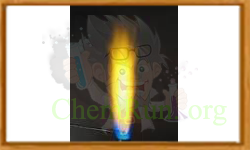
When sodium or its compounds are introduced into a flame, they turn it yellow,

Na when introduced to flame
because the excited 3s electrons of sodium emit a photon when they fall from 3p to 3s; the wavelength of this photon corresponds to the D line at 589.3 nm.
*Spin-orbit interactions involving the electron in the 3p orbital split the D line into two; hyperfine structures involving both orbitals cause many more lines.


Chemical Characteristics

*Sodium is generally less reactive than potassium and more reactive than lithium.
*Like all the alkali metals, it reacts exothermically with water, to the point that sufficiently large pieces melt to a sphere and may explode; this reaction produces caustic sodium hydroxide and flammable hydrogen gas.

Reaction with water

*When burned in dry air, it mainly forms sodium peroxide as well as some sodium oxide.
*In moist air, sodium hydroxide results.

  • Here are main reactions happen when a piece of sodium opened to air:
  1.  Na(s) + O2(g) → Na2O(s)
  2.  Na(s) + H2O(g / l ) → NaOH(aq) + H2(g)
  3.  Na2O(s) + H2O(g / l) → NaOH(aq)
  4.  NaOH(aq) + CO2(g) → Na2CO3(s) + H2O(l)
  5.  NaOH(aq) + CO2(g) + H2O(g/l) → NaHCO3(aq)

*Sodium metal is highly reducing, with the reduction of sodium ions requiring −2.71 volts but potassium and lithium have even more negative potentials.
 *Hence, the extraction of sodium metal from its compounds (such as with sodium chloride) uses a significant amount of energy.


Isotopes
*20 isotopes of sodium are known, but only 23Na is stable.
Two radioactive, cosmogenic isotopes are the byproduct of cosmic ray spallation: 22Na with a half-life of 2.6 years and 24Na with a half-life of 15 hours; all other isotopes have a half-life of less than one minute.
*Two nuclear isomers have been discovered, the longer-lived one being 24mNa with a half-life of around 20.2 microseconds.
Acute neutron radiation, such as from a nuclear criticality accident, converts some of the stable 23Na in human blood to 24Na; by measuring the concentration of 24Na in relation to 23Na, the neutron radiation dosage of the victim can be calculated.


Commercial production
*Enjoying rather specialized applications, only about 100,000 tonnes of metallic sodium are produced annually.
Metallic sodium was first produced commercially in 1855 by carbothermal reduction of sodium carbonate at 1100 °C[citation needed], in what is known as the Deville process:

    Na2CO3 + 2 C → 2 Na + 3 CO

*A related process based on the reduction of sodium hydroxide was developed in 1886.

*Sodium is now produced commercially through the electrolysis of molten sodium chloride, based on a process patented in 1924.
At Cathode:
    Na+(l) + e →Na(l)
At Anode:
    2Cl-(l) → Cl2(g) + 2e
*This is done in a Downs Cell in which the NaCl is mixed with calcium chloride to lower the melting point below 700 °C.
As calcium is less electropositive than sodium, no calcium will be deposited at the cathode.
*This method is less expensive than the previous Castner process of electrolyzing sodium hydroxide.

*Reagent-grade sodium in tonne quantities sold for about US$3.
30/kg in 2009; lower purity metal sells for considerably less.
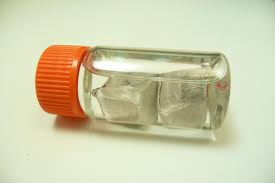
*The market for sodium is volatile due to the difficulty in its storage and shipping; it must be stored under a dry inert gas atmosphere or anhydrous mineral oil to prevent the formation of a surface layer of sodium oxide or sodium superoxide.
*These oxides can react violently in the presence of organic materials. Sodium will also burn violently when heated in air.
*Smaller quantities of sodium cost far more, in the range of US$165/kg; the high cost is partially due to the expense of shipping hazardous material.


Applications of Free element

Metallic sodium is mainly used for the production of

  • sodium borohydride,
  • sodium azide,
  •  indigo, and
  •  triphenylphosphine.
Previous uses were for the
  • making of tetraethyllead and
  • titanium metal;
  •  because applications for these chemicals were discontinued, the production of sodium declined after 1970.
  • Sodium is also used as
  • an alloying metal,
  • an anti-scaling agent, and as a reducing agent for metals when other materials are ineffective.
  • Sodium vapor lamps are often used for street lighting in cities and give colours ranging from yellow-orange to peach as the pressure increases.
*By itself or with potassium, sodium is a desiccant; it gives an intense blue colouration with benzophenone when the desiccate is dry.
*In organic synthesis, sodium is used in various reactions such as
the 

Birch reduction, and
the sodium fusion test is conducted to qualitatively analyse compounds. Lasers emitting light at the D line, utilising sodium, are used to create artificial laser guide stars that assist in the adaptive optics for land-based visible light telescopes.

Other applications, specially Heat transfering
*Liquid sodium is used as a heat transfer fluid in some fast reactors,due to its high thermal conductivity and low neutron absorption cross section, which is required to achieve a high neutron flux; the high boiling point allows the reactor to operate at ambient pressure.
*Drawbacks of using sodium include its opacity, which hinders visual maintenance, and its explosive properties. Radioactive sodium-24 may be formed by neutron activation during operation, posing a slight radiation hazard; the radioactivity stops within a few days after removal from the reactor. If a reactor needs to be frequently shut down, NaK is used; due to it being liquid at room temperature, cooling pipes do not freeze.
In this case, the pyrophoricity of potassium means extra precautions against leaks need to be taken.
*Another heat transfer application is in high-performance internal combustion engines with poppet valves, where valve stems partially filled with sodium are used as a heat pipe to cool the valves.


Compounds
Sodium compounds are of immense commercial importance, being particularly central to industries producing

  • glass,
  • paper,
  • soap, and
  • textiles.
The sodium compounds that are the most importantinclude
  • table salt (NaCl),
  • soda ash (Na2CO3),
  • baking soda (NaHCO3),
  • caustic soda (NaOH),
  • sodium nitrate (NaNO3),
  • di- and tri-sodium phosphates,
  • sodium thiosulfate (Na2S2O3·5H2O), and
  • borax (Na2B4O7·10H2O).
Na storage
*In its compounds, sodium is usually ionically bonded to water and anions, and is viewed as a hard Lewis acid.
*Two equivalent images of the chemical structure of sodium stearate, a typical soap.


Precautions
*Care is required in handling elemental sodium, as it generates inflammable hydrogen and caustic sodium hydroxide upon contact with water; powdered sodium may combust spontaneously in air or oxygen.
*Excess sodium can be safely removed by hydrolysis in a ventilated cabinet; this is typically done by sequential treatment with isopropanol, ethanol and water.

Isopropanol reacts very slowly, generating the corresponding alkoxide and hydrogen.

*Fire extinguishers based on water accelerate sodium fires; those based on carbon dioxide and bromochlorodifluoromethane lose their effectiveness when they dissipate.
*An effective extinguishing agent is Met-L-X, which comprises approximately 5% Saran in sodium chloride together with flow agents; it is most commonly hand-applied with a scoop.
*Other materials include Lith+, which has graphite powder and an organophosphate flame retardant, and dry sand. 

*Most soaps are sodium salts of fatty acids.
*Sodium soaps are harder (higher melting) soaps than potassium soaps.
*Sodium chloride is extensively used for anti-icing and de-icing and as a preservative; sodium bicarbonate is mainly used for cooking.
*Along with potassium, many important medicines have sodium added to improve their bioavailability; although in most cases potassium is the better ion, sodium is selected for its lower price and atomic weight.
*Sodium hydride is used as a base for various reactions (such as the aldol reaction) in organic chemistry, and as a reducing agent in inorganic chemistry.( you may learn aldol reaction under Organic chamistry )


Popular reactions

1) Na(s) + O2(g)
→ Na2O(s)
2) Na(s) + H2O(g / l )
→ NaOH(aq) + H2(g)
3) Na2O(s) + H2O(g / l)→
NaOH(aq)
4) NaOH(aq) + CO2(g)
→ Na2CO3(s) + H2O(l)
5) NaOH(aq) + CO2(g) + H2O(g/l)
→ NaHCO3(aq)
(When kept in air)

6) Na(s) + S(s)
→ Na2S(s)
7) Na(s) + F2(g) (halogens)
→ NaF(s)
8) Na(s) + P(s)
→ Na3P(s)
Reaction with water
9) Na(s) + HCl(aq) → NaCl(aq) + H2(g)
10)Na(s) + H2SO4(aq) → Na2SO4(aq) + H2(g)
note: Na(s) when reacts with an acid it turns to salt of metal and reduces Hydrogen gas.for a example think an acid called " HX "
if it reacts with Na(s) :
Na(s) + HX(aq) → NaX + H2(g)


11)Na(s) + NaOH(l) → Nothing happens
12)Na(s) + NaOH(aq) → NaOH(aq) + H2(g)
Note: The NaOH liquid (first) doesn't include free H+ / OH- ions as it doesn't contain water.
The NaOH aqueous solution it contains water and so that H+ / OH- contain.


13)Na(s) + CH3COOH(aq) → CH3COONa(aq) + H2(g)
(you will learn these types of reactions under organic chemistry)


Specieal characteristics of sodium

.......................................

Atomic properties
Oxidation states +1, -1
(strongly basic oxide)
Electronegativity 0.93 (Pauling scale)
Ionization energies
(more)
1st: 495.8 kJ·mol−1
2nd: 4562 kJ·mol−1
3rd: 6910.3 kJ·mol−1
Atomic radius 186pm
Covalent radius 166±9pm
Van der Waals radius 227 pm
General properties
Name, symbol, number sodium, Na, 11
Pronunciation /soʊdiəm/SOH-dee-əm
Element category alkali metal
Group, period, block 1, 3, s
Standard atomic weight 22.98976928(2)
for more details (Advanced) visit wikipedia